This project explores the global burden of malaria and diarrhoeal deaths among children aged 1–59 months using Gapminder data. The analysis highlights geographic disparities, identifies high-burden countries, and examines the relationship between the two leading causes of child mortality.

MScGH (C), BPH
Published: May 11, 2026
Table of Contents
1. Overview
Malaria and diarrhoeal diseases remain among the leading causes of mortality among children under five years globally, particularly in low- and middle-income countries. Understanding the geographic distribution and relationship between these diseases is essential for designing targeted public health interventions.
This analysis leverages comprehensive statistics provided by Gapminder to compare disease outcomes across countries in 2020, visualizing patterns that can inform global health strategies.
2. Data and Methods
Two core indicators were extracted from the Gapminder data portal for this analysis:
- Malaria deaths among children aged 1–59 months
- Diarrhoeal deaths among children aged 1–59 months
The datasets covered 192 countries between 2000 and 2020. However, this analysis focused specifically on the year 2020 to provide a recent global snapshot of current health challenges.
3. Results
3.1 Malaria Deaths
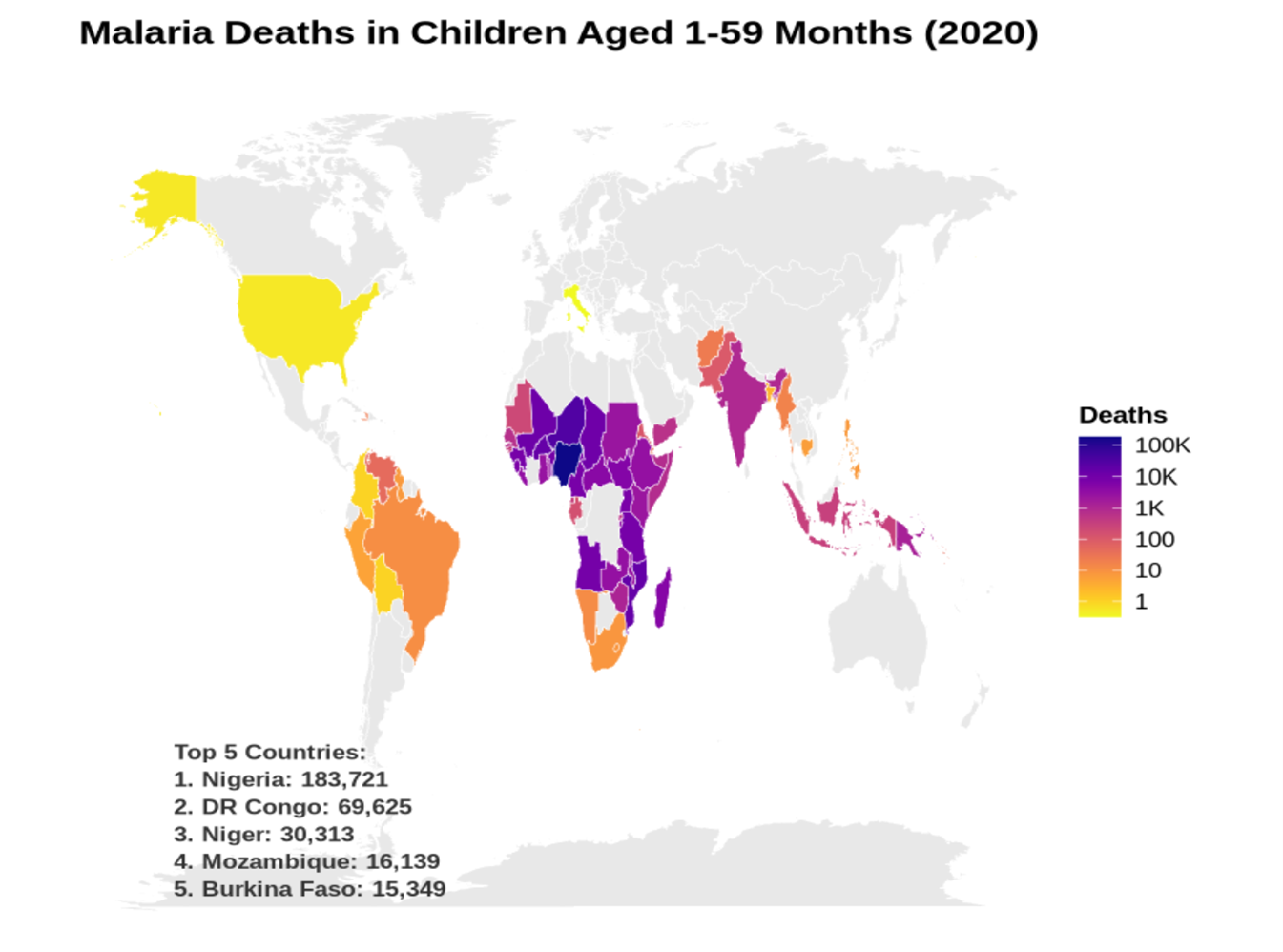
The heaviest concentration of malaria mortality remains in sub-Saharan Africa. High-burden countries include Nigeria, the Democratic Republic of Congo, Niger, Mozambique, and Burkina Faso.
3.2 Diarrhoeal Deaths
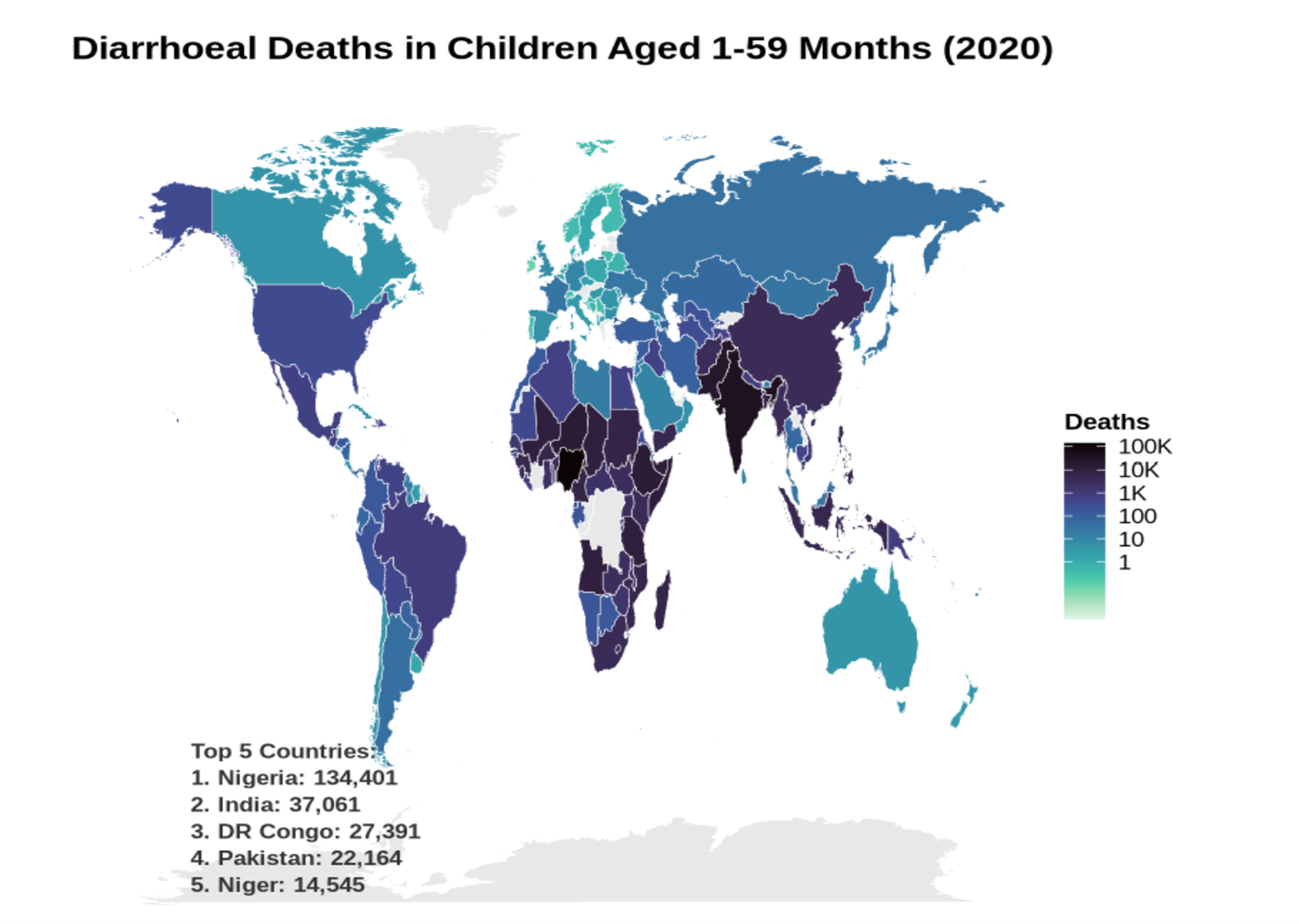
While also concentrated in sub-Saharan Africa, diarrhoeal deaths show a significant burden in South Asia. Countries with the highest mortality included Nigeria, India, the Democratic Republic of Congo, Pakistan, and Niger.
4. Relationship Between Indicators
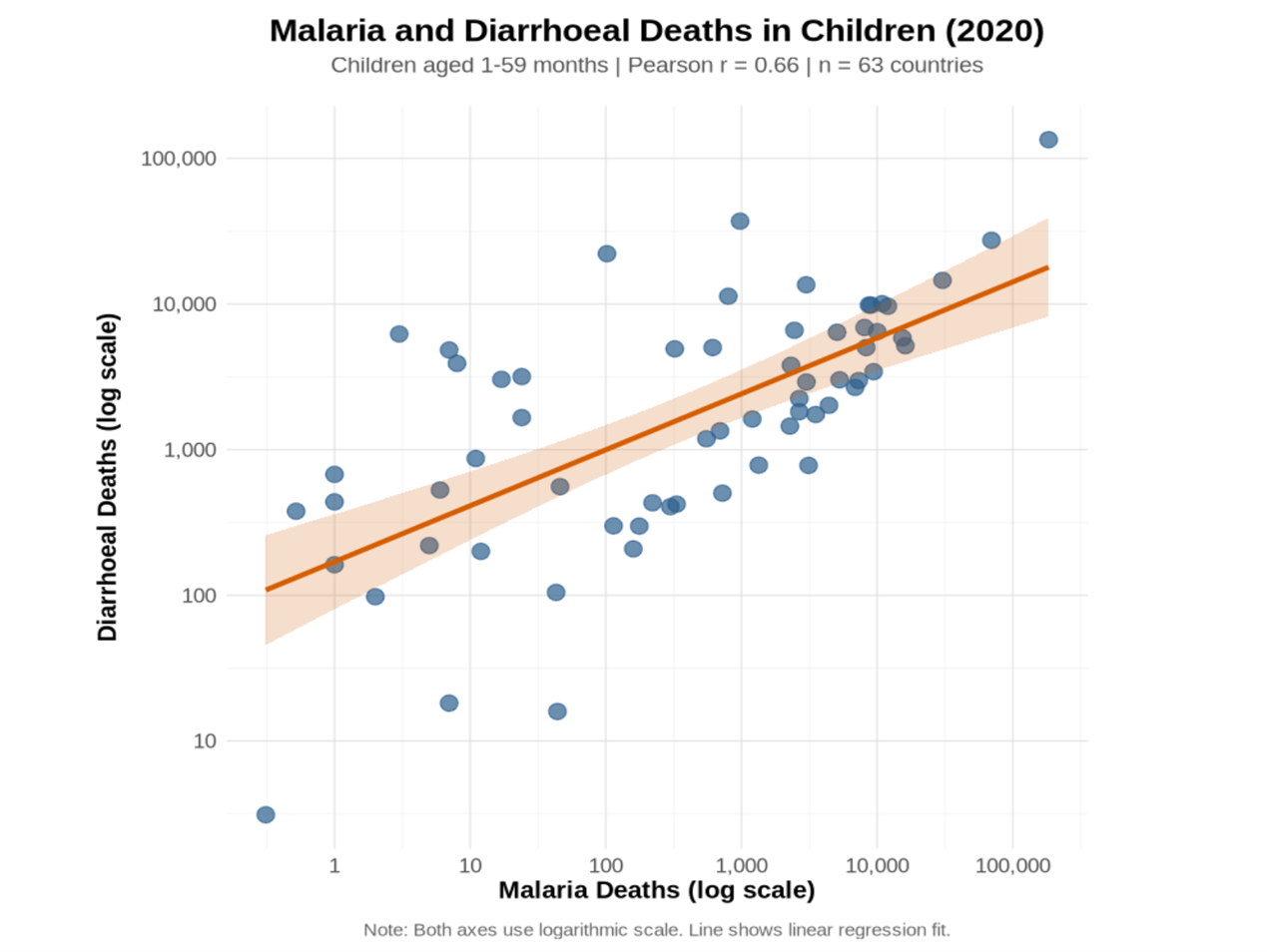
Our scatterplot analysis revealed a moderate-to-strong positive relationship between the two indicators. Countries with higher malaria mortality also tended to experience higher diarrhoeal mortality.
5. Conclusion and Policy Recommendations
The findings suggest shared structural determinants, including poverty, weak healthcare systems, poor sanitation, and limited access to clean water. Priority should be given to strengthening primary healthcare and expanding universal access to safe water and sanitation (WASH).
Policy Recommendations
- Launch Integrated Child Health Programmes in High-Burden Countries: Scale up combined malaria and diarrhoeal disease case management at primary care level, deploying community health workers in the highest-burden countries.
- Accelerate Universal Access to Safe Water and Sanitation (WASH): Adopt a rights-based national WASH framework with legally binding timelines, earmark at least 1% of GDP for WASH infrastructure, and enforce national drinking-water quality standards to address the root drivers of diarrhoeal mortality.
- Strengthen Malaria Prevention and Treatment Services: Achieve at least 80% coverage of insecticide-treated bed nets in all endemic districts, expand indoor residual spraying, and ensure uninterrupted supply of artemisinin-based combination therapy (ACT) at all public health facilities.
- Invest in Primary Healthcare and Maternal-Child Health Infrastructure: Guarantee at least one fully operational primary health care facility per sub-district with dedicated staffing, rural retention incentives, and a public-private partnership mechanism to co-finance facility rehabilitation in underserved places.
- Establish Real-Time Disease Surveillance and Data-Driven Governance: Mandate monthly subnational reporting on child mortality indicators, and publish open-access dashboards to strengthen accountability and adaptive management.