This analysis examines 400 data analyst job postings to explore the relationship between required experience, programming language skills, and salary expectations.

MScGH (C), BPH
Published: May 12, 2026
Table of Contents
1. Introduction
In a rapidly evolving job market, understanding what drives compensation for Data Analysts is critical for both job seekers and recruiters. This study uses a dataset of 400 postings to evaluate how median salary estimates are impacted by minimum years of experience and specific technical requirements—namely proficiency in R and Python.
Reproduce this Analysis
Transparent data is the foundation of credible research. I have made the full dataset available. Access the raw data below to replicate my findings or conduct your own investigation.
Download Dataset (.csv)Julius AI was utilized to assist with the computational aspects of this analysis, allowing for rapid pattern recognition while maintaining a focus on human-centric critical interpretation.
2. Years of Experience Analysis
One might assume that higher years of experience directly correlate with significantly higher pay. However, the analysis reveals a weak linear relationship between these two variables.
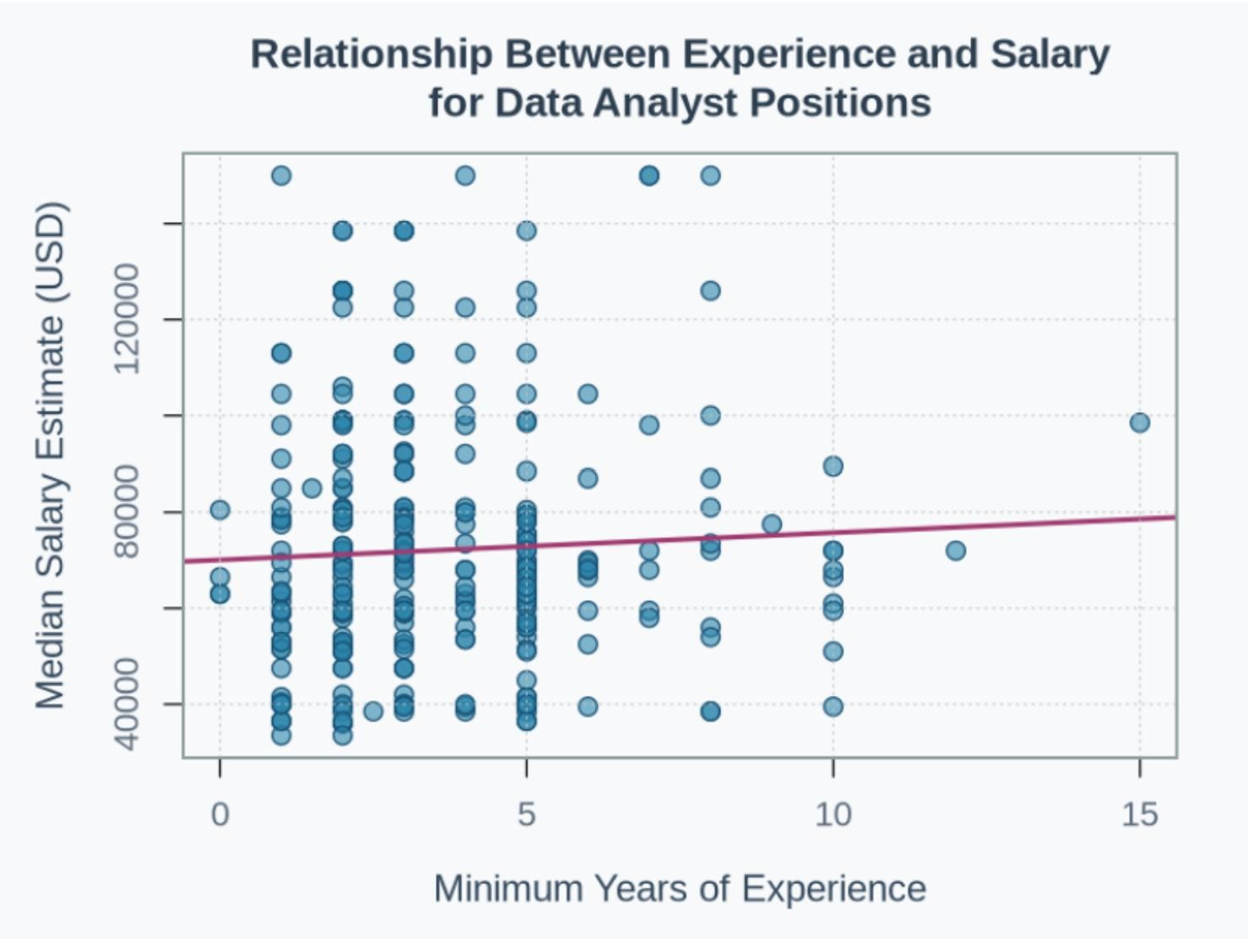
"The wide spread of salaries at every experience level suggests that other factors—such as industry, location, and specialized technical expertise—are the primary drivers of compensation."
3. Programming Language Analysis
When examining technical stacks, a clearer pattern emerges. Roles requiring proficiency in modern data science languages, particularly Python, tend to offer higher average compensation.
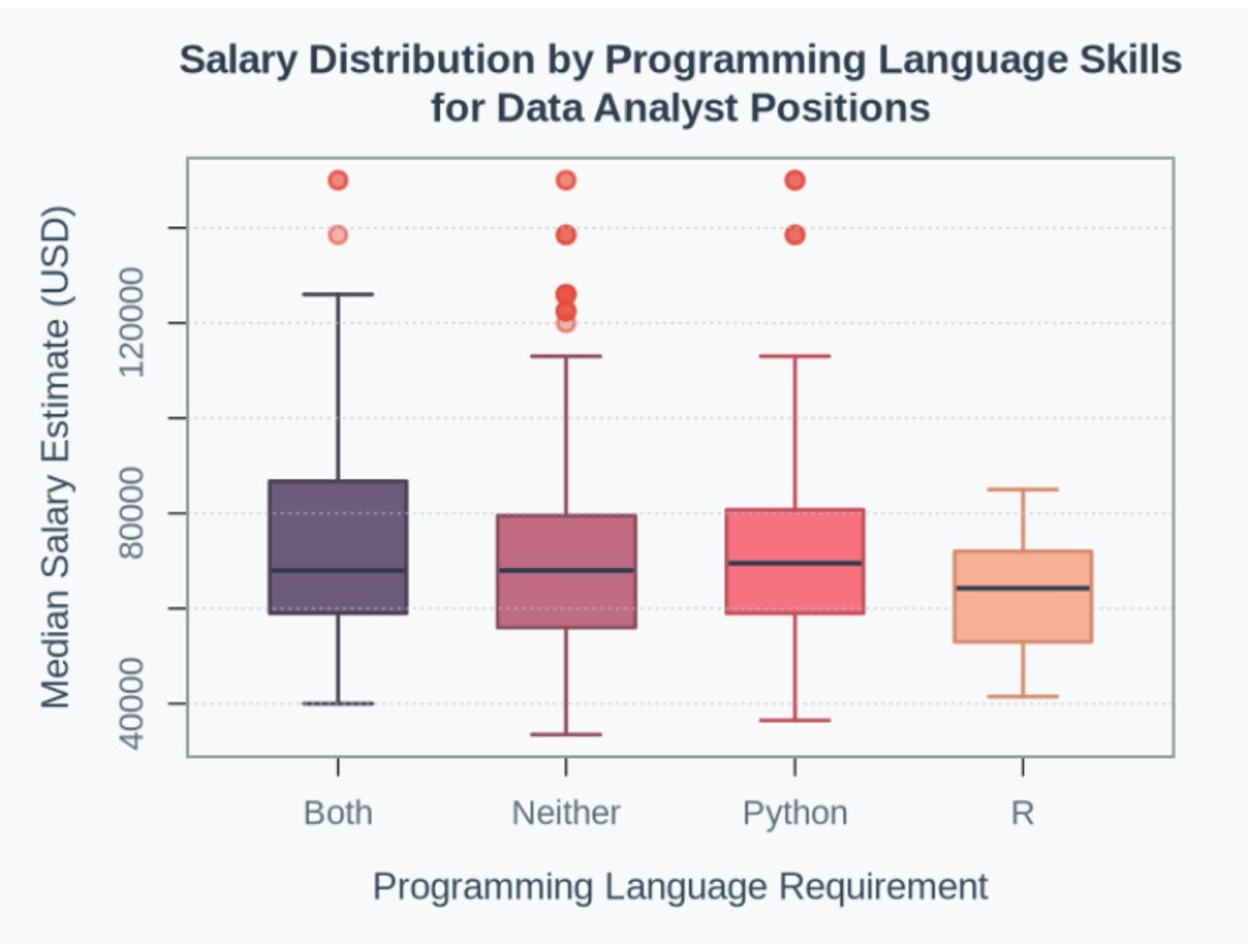
The findings suggest that being "bi-lingual" in data (R and Python) provides a competitive edge, though Python remains the most lucrative single-language requirement in this specific dataset.
4. Conclusion
- Experience alone is a poor predictor of a Data Analyst's salary in the current market.
- Proficiency in Python or a combination of Python and R is associated with the highest salary tiers.
- The lack of correlation with years of experience highlights a "skills-first" hiring environment where technical depth outstrips time spent in roles.
5. Reflection on Using Julius AI
Using Julius AI significantly accelerated the data cleaning and visualization phases of this project. It allowed for the rapid testing of multiple hypotheses—such as whether the R-only vs. Python-only gap was statistically significant.
However, the tool reinforces the need for precise prompting and critical verification. Data analysis remains a human endeavor; while AI provides the engine, the analyst provides the direction and the ethical interpretation of the results.